

About AWBA
The Advanced Woody Biomass Alliance (AWBA) is a trade association representing organizations across the woody biomass value chain.
The Alliance brings together fiber suppliers, energy and fuel producers, and policymakers to expand markets for woody biomass from U.S. working forests across carbon-dependent industries.
The Alliance brings together fiber suppliers, energy and fuel producers, and policymakers to expand markets for woody biomass from U.S. working forests across carbon-dependent industries.


Our Mission
AWBA advances policy, markets, and industry collaboration to expand certified woody biomass from U.S. working forests in carbon-dependent industries.
Our Vision
AWBA is shaping a future where working forests are recognized for what they produce — renewable carbon products for energy, fuels, materials, and carbon markets — while strengthening forest stewardship, rural economies, domestic energy production, and access to international markets.
Our History
The Advanced Woody Biomass Alliance builds on the foundation of the U.S. Industrial Pellet Association (USIPA), which for more than a decade advanced markets for wood pellets produced under recognized sustainability standards. As markets and technologies have evolved, so too has the role of woody biomass.
AWBA was created to meet this moment. To represent the growing range of uses for forest-based renewable carbon from energy to advanced fuels and materials to carbon management. The Alliance carries USIPA’s institutional experience into these innovative markets.
Leadership
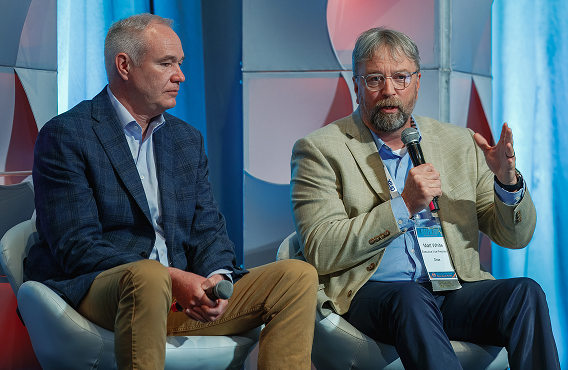
AWBA is governed by a Board of Directors drawn from its membership. The Board provides strategic oversight, ensures alignment with the Alliance’s mission, and guides engagement across policy, industry, and international markets.
Board members bring deep experience across forestry, energy, manufacturing, sustainability standards, logistics, and global trade, reflecting the full scope of the advanced woody biomass value chain.
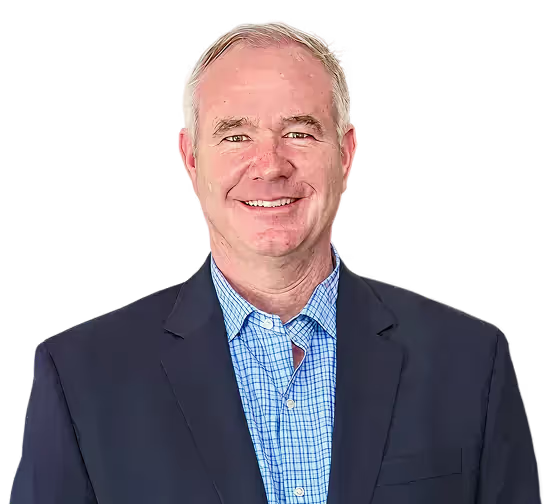
Thomas Reilley

AWBA Board Chairman
Chairman, Highland Pellets
Chairman, Highland Pellets
Tom is an experienced investor and entrepreneur with a background in global finance and private equity. He founded Kalan Capital and previously led international wealth management at Bear Stearns.

Karen Elliott
AWBA Board Member
Vice President, Communications – North America, Drax
Vice President, Communications – North America, Drax
Karen is a strategic communications and public affairs expert who has helped companies and trade organizations navigate reputational and business challenges across several highly regulated industries. She also served as a journalist and press secretary for two U.S. senators in Washington D.C.
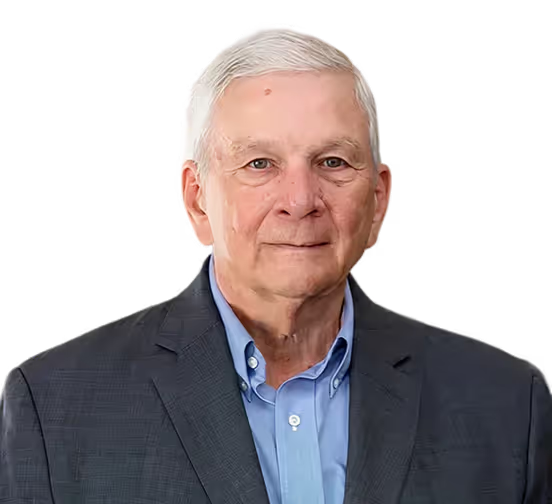
Harold Arnold
AWBA Board Member
President, Fram Renewable Fuels
President, Fram Renewable Fuels
A lifelong forestry professional, Harold has led Fram’s growth since 2005, bringing deep industry experience in export, consulting, and wood pellet development.

Simon Plagborg
AWBA Board Member
CEO, Northflare Energy
CEO, Northflare Energy
Simon leads the world’s largest biomass trading firm, with global operations and deep experience in commercial strategy and executive leadership.

Glenn Nunziata
AWBA Board Member
CEO, Enviva
CEO, Enviva
Glenn leads Enviva’s global operations, bringing executive experience from Smithfield Foods and nearly two decades at EY. He joined Enviva as CFO in 2023 and became CEO in 2024.

Peter-Paul Schouwenberg
AWBA Board Member
Senior Vice President, Stakeholder Management & Sustainability
RWE Generation SE
Senior Vice President, Stakeholder Management & Sustainability
RWE Generation SE
Peter-Paul is Head of Stakeholder Management and Sustainability at RWE, where he has been responsible for the company’s circular bio-based economy since 2010. Previously, he spent more than 10 years as Vice-President, Biofuels & Development at Essent Trading International SA, responsible for global biomass sourcing, trading and development. He was also a founder of the Sustainable Biomass Program and has a legal and business administration background.
Staff
The Alliance’s staff leads day-to-day operations, policy engagement, communications, and member support. The team works closely with members and partners to advance shared priorities and represents the industry in public and regulatory forums across the world.
AWBA staff bring experience spanning policy, sustainability standards, market development, and international engagement, enabling the Alliance to operate effectively at the intersection of forestry, energy, and climate.
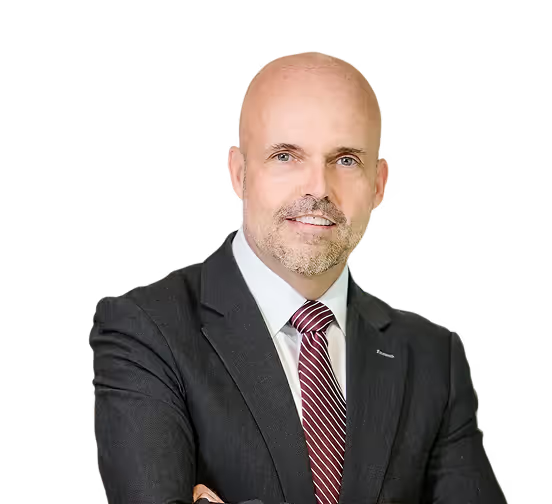
Darrell Smith PhD, CAE, CIH
President
Trade association and government relations executive who has held leadership roles in the energy, mining, waste and chemical industries. A graduate of The Citadel who holds degrees in leadership and environmental science & policy.

Taylor Fitts
VP, Communications & External Affairs
Taylor leads strategic communications and engagement, with 20+ years of experience across agriculture, manufacturing, and tech sectors.

Andrew Georgiou
Vice President, Global Policy
Andy leads AWBA’s global policy work, with deep experience in UK, EU, and U.S. biomass regulation. He serves on the Board of Bioenergy Europe.

Melissa DeGraw
Director, Membership
Melissa brings 15+ years of association experience and a passion for building strong, creative member partnerships.
Current Members
AWBA’s members include producers, processors, logistics providers, end-users and other organizations engaged in the advanced woody biomass value chain. Together, members represent significant operational scale, technical expertise, and investment across domestic and international markets.


























Working Groups
AWBA convenes member-led working groups to address priority issues across policy, sustainability, operations, and supply chain performance. These working groups are central to how the Alliance brings people together, shares best practices, and responds to evolving regulatory and market conditions.
Each working group meets on a monthly basis and brings together subject-matter experts from across the membership. Discussions are grounded in real-world experience and focused on practical outcomes that support responsible growth of the advanced woody biomass sector.
AWBA’s current working groups include:

Policy & Sustainability
Focused on renewable carbon and sustainability policy, and forest management standards. This group supports AWBA’s engagement with policymakers across the world by translating technical and operational insight into clear, credible policy positions.

European Deforestation Regulation (EUDR)
Dedicated to monitoring and responding to the European Union’s Deforestation Regulation. This group supports members in sharing best practices and understanding compliance requirements and the implications of EUDR for transatlantic supply chains and global markets.

Safety
Concentrated on operational safety across production, handling, and storage. Members share best practices, lessons learned, and emerging standards to support a strong safety culture across facilities and logistics networks.

Transportation
Focused on the movement of woody biomass across rail, truck, and maritime systems. This group addresses logistics efficiency, infrastructure constraints, regulatory considerations, and supply chain resilience from forest to end use.
Through these working groups, AWBA ensures that member expertise directly informs the Alliance’s priorities, reinforces industry leadership, and supports consistent, high standards across the sector.
Be Part of the Platform Shaping the Future of Renewable Carbon
Contact Us