Where Renewable Carbon Is Needed Most
Woody biomass is one of the most versatile renewable carbon sources available, enabling the production of clean power and heat, advanced fuels and carbon removals.
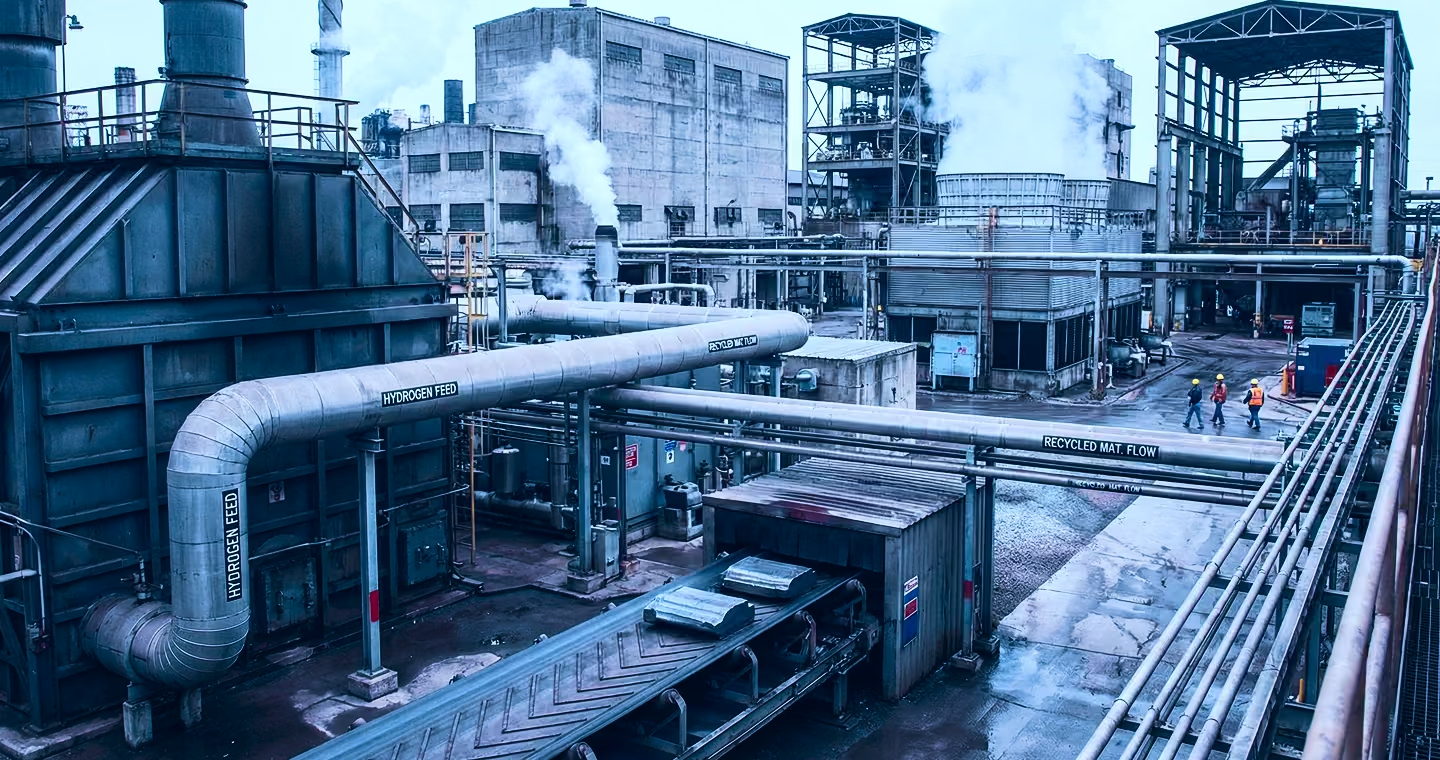
Unlike many carbon solutions still in development, these applications are operating today — leveraging existing infrastructure, established supply chains, and decades of operational experience. Together, they demonstrate how renewable carbon from working forests can deliver economic value, energy security, and environmental performance across multiple sectors.

Beyond electricity and district heating systems, woody biomass supplies renewable thermal energy for industrial users that require consistent, high-temperature heat — a need that intermittent resources cannot meet alone.
Power & Heat
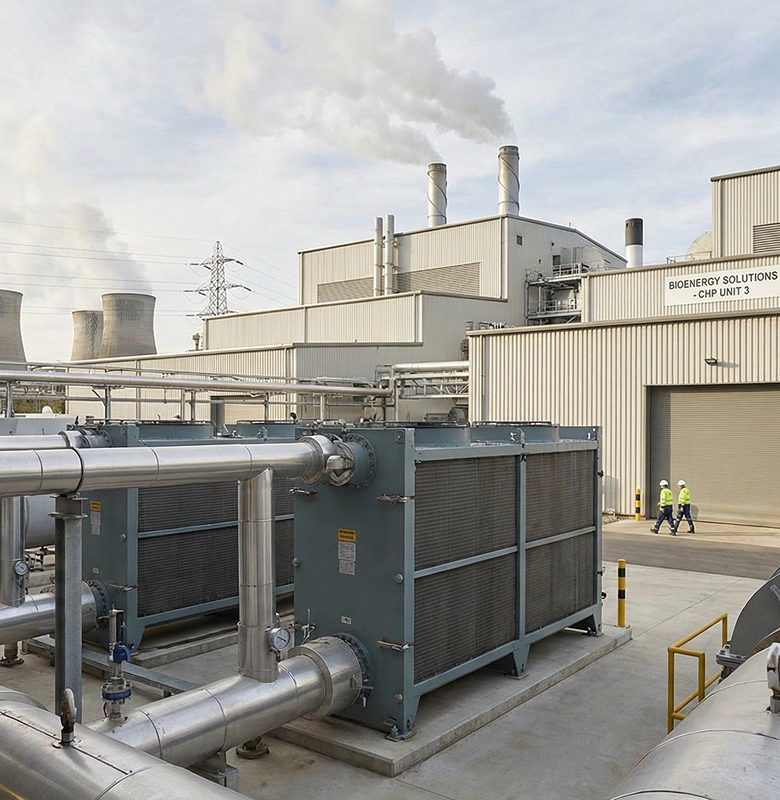
Woody biomass offers one of the fastest and most capital-efficient pathways to reduce emissions existing power and heat infrastructure.
These conversions often require significantly lower capital investment than new-build generation and can be completed on accelerated timelines — in many cases in under two years — while preserving grid connections, permits, and saving jobs.
By leveraging existing assets, biomass:
Maintains firm, dispatchable capacity critical to grid reliability.
Avoids premature retirement of long-lived infrastructure.
Preserves local jobs and regional economic activity.
Reduces emissions without sacrificing energy security.

Beyond electricity and district heating systems, woody biomass supplies renewable thermal energy for industrial users that require consistent, high-temperature heat — a need that intermittent resources cannot meet alone.
Advanced Fuels
Liquid fuels remain essential for sectors that cannot be fully electrified, including aviation, maritime transport, and heavy freight.
Advanced woody biomass supplies renewable, biogenic carbon that can be converted into:
Sustainable aviation fuel (SAF).
Renewable marine fuels.

Forest-based biomass offers a high density, uniform, and scalable feedstock capable of supporting fuel production volumes measured in millions of gallons per year.

For industries facing limited options, biomass enables near-term progress while longer-term technologies continue to develop.
Heavy Industry
Heavy industry accounts for a substantial share of global emissions and presents some of the most difficult challenges in sourcing non-fossil carbon inputs.
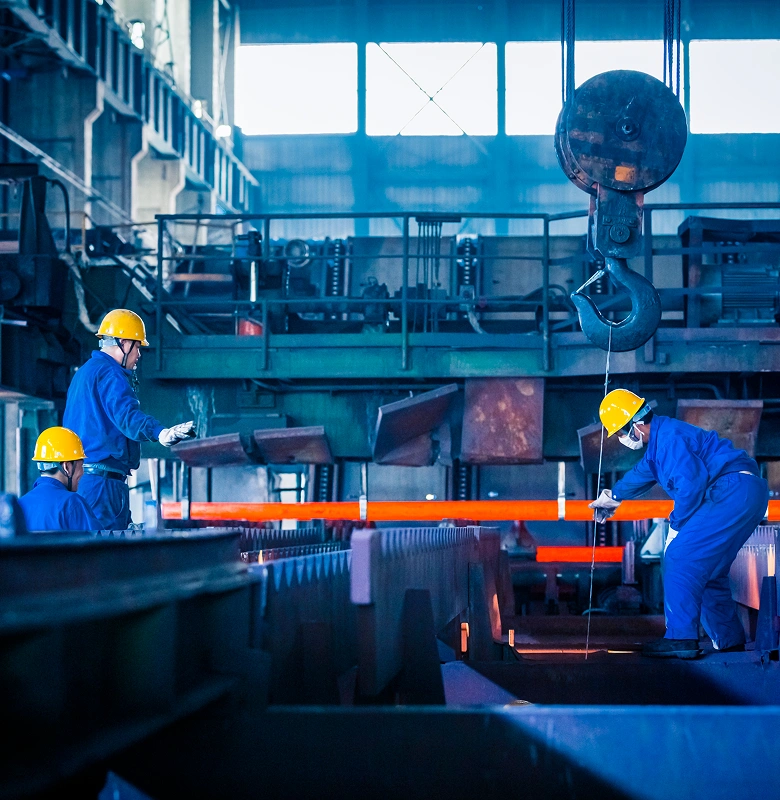
Processes such as steelmaking, cement production, lime kilns, and chemicals manufacturing require high-temperature heat and carbon-based inputs that electricity alone cannot readily replace.
Woody biomass supports emissions reductions in these sectors by providing:
Renewable thermal energy at industrial temperatures.
Biogenic carbon for metallurgical and chemical processes.
A scalable alternative to fossil fuels where electrification is constrained.

For industries facing limited options, biomass enables near-term progress while longer-term technologies continue to develop.
Digital Infrastructure
The rapid expansion of digital infrastructure is driving unprecedented growth in electricity demand.
Data centers already consume nearly 3% of global electricity, and U.S. demand alone is expected to double by 2030. AI-optimized facilities intensify this challenge, with energy use per rack up to six times higher than traditional cloud infrastructure.
These systems require power that is:
Available 24/7, with no tolerance for interruption.
Rapid to deploy, with minimal grid connection challenges.
Low-carbon or negative carbon, aligned with corporate and national emissions commitments.
Woody biomass meets all three. As a firm, dispatchable renewable resource, it complements wind and solar without relying on large-scale battery deployment.
Critically, coal-to-biomass conversions or behind the meter dedicated biomass plant can be brought online far faster than new grid infrastructure, bypassing multi-year planning and interconnection delays.

For digital infrastructure developers balancing speed, stability, and low-emissions power, biomass provides a reliable backbone for growth.

As private markets and governments invest billions into carbon removal, demand for reliable, renewable biogenic carbon is accelerating. Woody biomass is available today, scalable, and compatible with existing capture technologies — making it a foundational feedstock for carbon-negative systems.
BECCS & Carbon Removal
Renewable carbon from woody biomass is increasingly being used to produce advanced, low-carbon materials that displace fossil-derived inputs.
BECCS combines biomass energy with carbon capture to deliver net-negative emissions — generating energy or fuels while permanently removing carbon dioxide from the atmosphere.
This makes it one of the few scalable solutions capable of delivering the gigatons of carbon removal required to meet global climate goals.

As private markets and governments invest billions into carbon removal, demand for reliable, renewable biogenic carbon is accelerating. Woody biomass is available today, scalable, and compatible with existing capture technologies — making it a foundational feedstock for carbon-negative systems.
Advanced Materials
Renewable carbon from woody biomass is increasingly being used to produce advanced, low-carbon materials that displace fossil-derived inputs.
Applications include:
Biocarbon for metallurgical processes.
Bio-based chemicals and polymers.
Construction and industrial materials with reduced embodied carbon.

By embedding renewable carbon directly into products, these applications reduce fossil dependence beyond energy and into the physical materials that underpin modern economies.