

How AI is Transforming Wood-Based Operations
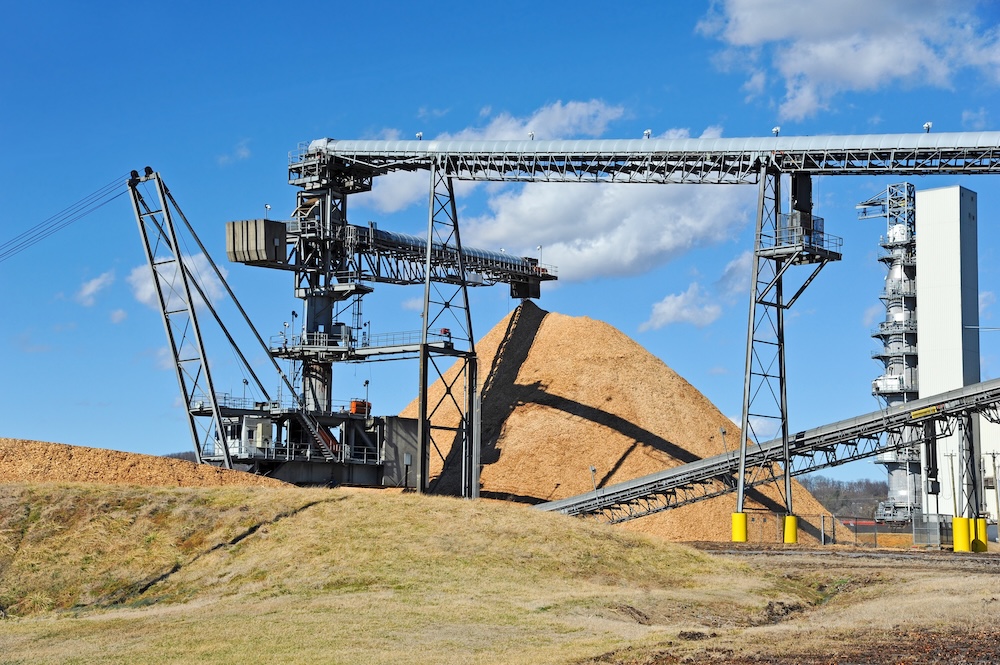
From Reactive to Resilient: How AI-Driven Machine Health Is Redefining Reliability in Wood-Based and Industrial Operations
Written by: Alex White – Regional Account Executive, Augury
Edited by: Sara Aldworth - Content Marketing Manager
Wood-based manufacturing, biomass processing, and industrial operations run some of the most demanding equipment in any industry. Mechanical conveying systems, dryers, and size-reduction equipment operate under constant stress. Abrasive materials accelerate wear, and your teams are asked to keep production moving with limited resources and growing asset complexity. Unplanned downtime adds real costs: lost production, emergency labor, safety exposure, and unpredictable maintenance schedules.
What's changing is that you now have greater visibility into your equipment than ever before. Advances in sensors, cloud computing, and AI make continuous monitoring and early detection of developing failures possible. This lets your teams shift from reacting to issues to anticipating and preventing them.
Moving From Reactive to Resilient
Most facilities run a mix of monitoring approaches. Teams conduct manual inspections, respond to breakdowns, and use basic sensors that trigger alarms for major faults. These methods have been foundational. The opportunity now is to fill the gaps between scheduled checks, where early warning signs can quietly develop before becoming a production problem.
The root causes are consistent across facilities. Bearings degrade under load, misalignment and looseness introduce vibration, and environmental exposure accelerates component fatigue. These challenges are compounded by workforce constraints: experienced technicians are in short supply, and institutional knowledge is difficult to scale. The result is a system that responds well to failures it can see but has limited visibility into what's developing.
AI Enables Real-time Machine Monitoring to Close Gaps
Sensors track key signals like bearing wear and vibration patterns, then flag early changes. These systems connect with your existing maintenance workflows to offer clear, prioritized recommendations, so your teams know what's happening and what to do next.
This shift is not theoretical. Across industrial organizations, predictive maintenance has been shown to significantly improve forecasting accuracy, reduce unplanned downtime, and increase maintenance productivity. More importantly, it reframes maintenance from a reactive cost center into a strategic lever for operational performance.
That's where the right platform makes a difference. Augury uses sensors and AI diagnostics to deliver clear recommendations, not just basic alerts, so teams can plan and act with confidence. One global forestry company worked with Augury across 400 assets, avoiding 167 hours of downtime and saving $1.9 million in the first year by catching failures early. In similar wood and biomass facilities, organizations have reported program payback within months, reductions in unplanned downtime, and the ability to better plan maintenance activities based on actual machine conditions rather than fixed schedules.
For your leadership team, the case is straightforward. AI-driven machine health programs reduce equipment failures, lower downtime costs, enhance energy efficiency, and improve safety outcomes. In many facilities, energy losses from inefficient equipment can match or even exceed downtime costs. Machine health is not just about reliability. It is a concrete driver of profitability and sustainability.
Machine health programs also help address one of the most pressing challenges facing your operations today: the growing skills gap. By combining AI-driven diagnostics with expert validation, modern machine health platforms make advanced reliability insights accessible to a broader range of your teams, putting deep expertise within reach of every operator and technician.
Success Depends on Focused Implementation
Scaling too fast or without proper workflows leads to missed alerts and hard-to-measure impact. A good starting point is identifying a measurable metric, such as downtime hours or maintenance costs for key assets, and establishing a baseline before deployment. That connection makes it much easier to tie improvements directly to the machine health program over time.
The strongest programs start with clear problems, such as recurring failures or excess emergency maintenance, and align solutions with the riskiest assets. Not all machines carry equal risk, so identifying your highest-impact equipment is key to building early momentum.
In your facilities, high-impact assets often include material-handling equipment, thermal processes, and rotating machinery, such as conveyors, chippers, dryers, fans, compressors, and pumps. Focusing on these machines links machine health insights directly to your business results.
A failing bearing on a conveyor may not stop production at first, but if missed, it can lead to bigger problems, forced shutdowns, lost output, higher energy use, and safety risks.
The Importance of a Pilot Project
A focused pilot on key machines is often where the strongest deployments begin. This lets your teams set a performance baseline, test early insights, and build trust in the system. Results often appear within months, with full value realized over time as more patterns are identified.
Technology alone does not drive results. People and processes do. One of the most important factors in any deployment is workforce adoption. Your maintenance and operations teams do their best work when they understand how the system supports them, not replaces them. It is natural for technicians to have questions about how AI-driven systems fit into their roles. The reality is that these technologies are designed to extend, not replace, technician expertise.
AI-driven platforms work best when teams collaborate. The system improves when your technicians validate findings and respond to alerts, making insights more accurate and useful over time.
As you move beyond the pilot phase, the challenge shifts from proving value to scaling it. What works in one facility must be standardized to work across many. This requires consistency in how assets are selected, how alerts are prioritized, and how responses are executed. Without this structure, you risk fragmented adoption and inconsistent outcomes. The strongest programs treat the pilot not as a test, but as a blueprint, replicating both the technology and the operational processes that made it successful.
Integration with Existing Systems is Key
Equally important is integration. AI-driven machine health must operate within your existing workflows, not alongside them. When insights are connected directly to your maintenance management and operational systems, they become actionable, feeding into work orders, planning, and execution. This ensures that machine health is not another dashboard to monitor, but a capability embedded into how your facility operates day to day.
While the initial impact of machine health is often measured in reduced downtime and maintenance costs, the long-term value is significantly broader. You gain greater operational predictability, improved energy efficiency, reduced safety risk, and stronger control over asset performance across your facilities. Over time, this enables your leadership to move from reacting to operational risk to actively managing it.
For you and your leadership team, the next step is not simply adopting technology. It is understanding where it fits within your specific operation. That begins with evaluating your current maintenance practices, identifying the assets that create the most disruption or cost, and defining what success looks like across production, reliability, and safety. Selecting the right partner matters too. Look for strong technical support, demonstrated industry experience, seamless integration with your existing systems, and a clear track record of delivering measurable results in facilities like yours.
Ready to reduce downtime, improve reliability, and scale best practices across your wood and biomass operations? Connect with our team to learn how Augury combines AI-driven diagnostics with expert insight to help you get there.
To contact Alex White at Augury, please email or call:
awhite@augury.com
(864)501-3925
Be Part of the Platform Shaping the Future of Renewable Carbon